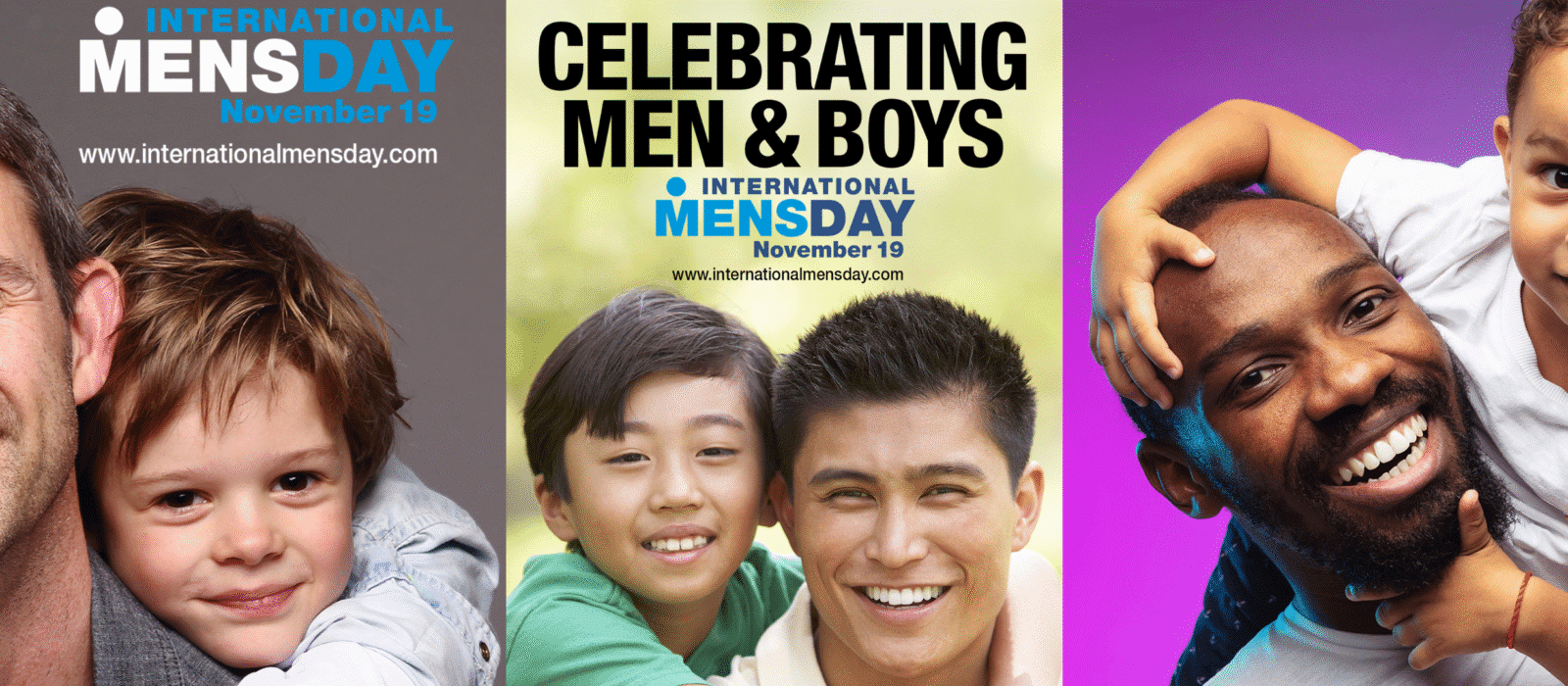
This year’s theme
Today, 19 November, is International Men’s Day (IMD). The theme this year is “Celebrating Men & Boys” and we are encouraged to celebrate “worldwide the positive value men bring to the world, their families and communities. We highlight positive role models and raise awareness of men’s well-being“.
Do we even need IMD?
Whilst we agree that it is useful to celebrate men’s positive contributions to society, this is such a simple act that we really need to put this in action every day of the year. Actually it doesn’t really feel like it needs a special day for this to happen because men’s achievements tend to be well recognised and celebrated anyway. In years like this, where IMD focuses on a rather simplistic theme like ‘celebrating men’, we find the existence of IMD particularly jarring.
We feel that the lack of radicalism of IMD is a general issue that makes the day not very useful in general. Whilst the more well-known International Women’s Day (8 March) is broad, political and specific in its aims, focussing on equality between the sexes, tackling male violence against women & girls and ensuring women’s reproductive rights the aims of International Men’s Day are a lot more unspecific and narrow focusing on 6 pillars:
- To promote positive male role models, not just movie stars and sportsmen, but everyday, working-class men who are living decent, honest lives.
- To celebrate men’s positive contributions to society, community, family, marriage, child care, and the environment.
- To focus on men’s health and wellbeing; social, emotional, physical and spiritual.
- To highlight discrimination against men, in areas of social services, social attitudes and expectations, and law.
- To improve gender relations and promote gender equality
- To create a safer, better world, where people can be safe and grow to reach their full potential.
Don’t get me wrong, there is some good stuff in there on the surface, however the aims of a truly transformational IMD need to go a lot further. If IMD really wants to change the world for men and boys and society. Without focussing on the structures that contribute to and enable the way men currently are in the world, IMD will never do more than scratch the surface.
IMD = MRA?
Another reason why MACS rejects IMD in it’s current format is because it is rooted in and supportive of heterosexual men’s rights activism
Dads4Kids, the Australian organisation who sponsors the IMD website, is anti-feminist, anti-choice, and anti-homosexuality. On their website, an article about the ‘red pill’ by S.A. McCarthy describes “abortion…and the decline of the family” are “moral and societal cancers“, argues that “feminism has poisoned culture against men…and proliferated and normalised sexual degeneracy among women” and describes two distinct types of (male) homosexuality with one being “effeminate homosexuality which favours leopard print and limp wrists. This form of homosexuality is prone to a catty love-hatred of women born out of envy“.
The International Men’s Day homepage also promotes Men’s Equality Month (MEM), “a full month that we focus on achieving equal treatment and care for men and boys perspectives“. One of the goals of MEM, under the hashtag #GenderEqualityForMen is to “raise awareness about the 12 areas of male disadvantage“. Surely unsurprisingly at this point, the areas of disadvantage include false accusations of abuse being made against men; men not having the right to choose whether to abort or keep a baby; being victims of paternity fraud; legal biases against fathers in child custody cases and so on.
What IMD should be
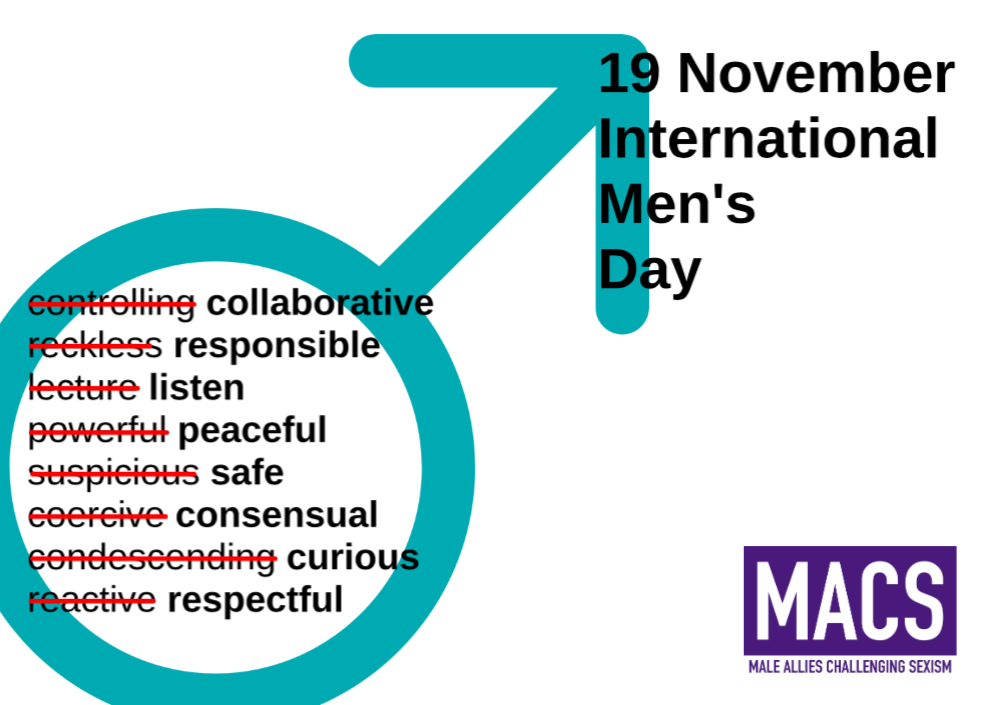
MACS believes that the only way for men and boys to become more empathetic, connected and humane is to let go of gender stereotypes and accept everyone’s sexual orientation, whether he or she be heterosexual, homosexual or bisexual. Instead of rejecting feminism, we also need boys and men to learn that radical feminism is a political movement that we should embrace, not fear. Because only radical feminism has the depth of societal analysis that will help men and boys to break free from the capitalist powers that drive them towards consuming women and girls for sexual gratification and that will support them in becoming more caring and equality driven towards women.
If we are to have an IMD it really needs to be a bit more ambitious and also dare to look at uncomfortable realities:
- At least 147 women were killed by 144 men in 2021 in the UK alone (Femicide Census, 2021).
- The majority of CSAE (Child Sexual Abuse and Exploitation) crimes in England & Wales are perpetrated by males (82%) against females (79%) – (NPCC, 2022).
- The vast majority of domestic abuse defendants are male (92%) & the vast majority of victims female (77%) – (ONS, 2020).
- 58% of boys aged 16–21 said they had intentionally sought out online pornography. 79% had seen content involving sexual violence before turning 18 – (Children’s Commissioner, 2023).
- Men are more than twice as likely (32%) than women to drink at increasing or higher risk levels (over 14 units in the last week for both men and women) – (NHS, 2022).
We urgently need to have conversations with boys and men about how to build and maintain good relationships; we need to give men and boys the tools to communicate their feelings in constructive rather than destructive ways (e.g. using drugs / alcohol; using pornography; committing violence, including (sexual) assault, harrassment, femicide, suicide etc); we need to teach them empathy for other (human) beings and the planet; we need to educate them about the harmful impact of pornography and we need to work to protect underage boys from pornography, sexualised and misogynistic content online. The list goes on.
We cannot speak about the issues that men and boys face, like poor mental health, if we do not also speak about the societal consequences of how men and boys deal with their issues and the socio-economical and cultural factors that enable this. In other word, we need to take a long and realistic look at the bigger picture, issues that men and boys face. The consequences for women and girls, for society and for men and boys.