

EVENT INTRODUCTION
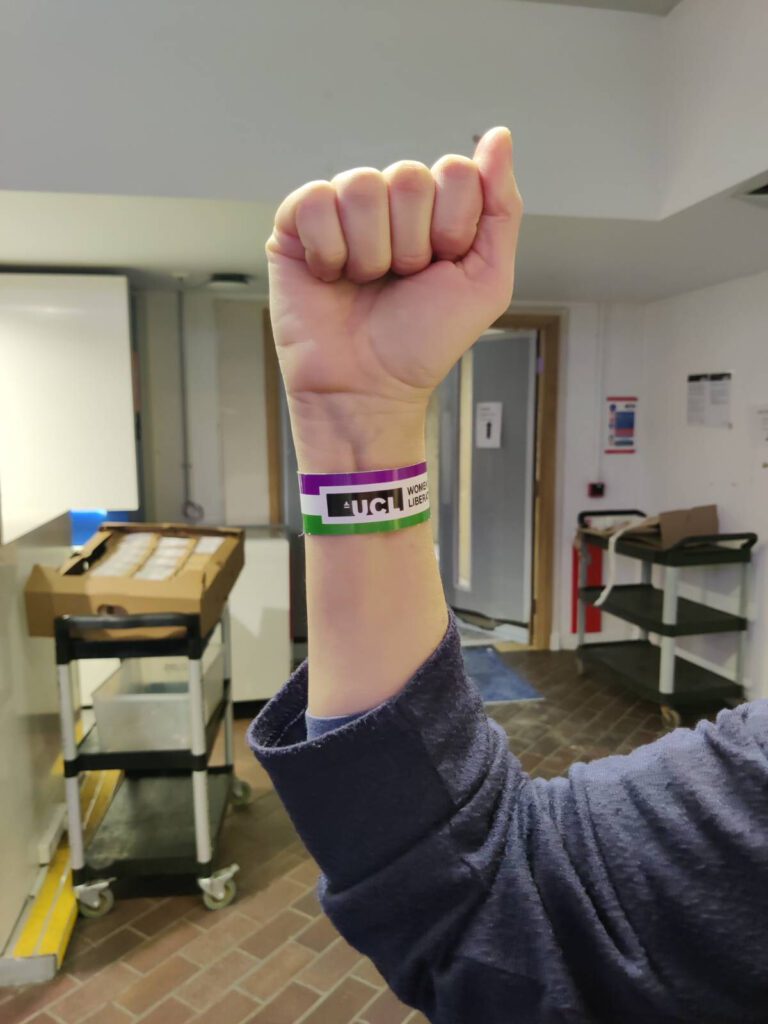
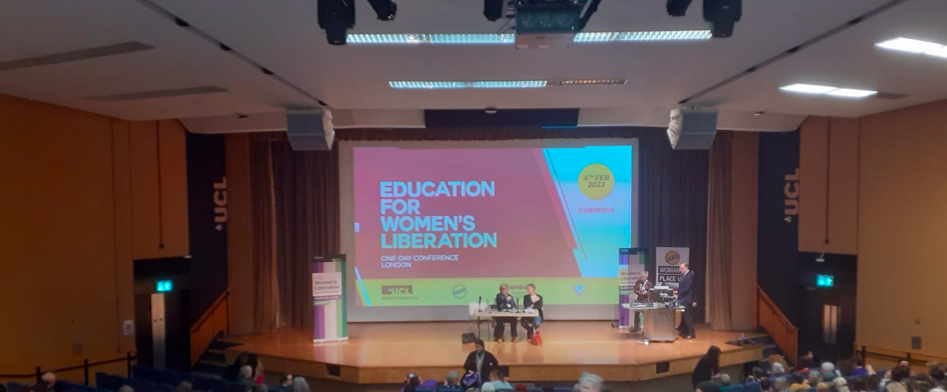
The Education for Women’s Liberation Conference co-organised by Woman’s Place UK and UCL’s Women’s Liberation Special Interest Group (SIG) and supported by FiLiA and Southall Black Sisters was held last Saturday, 4th February, at UCL and marked a significant advancement in the revolutionary consciousness of feminism in Britain.
It had been three years since feminists at UCL organised the last education for women’s liberation event. Many of the speakers had been there before and reflected upon the achievements made since, from the shutdown of the Tavistock, the collapse of Mermaids and the Maya Forstater case.
The conference did not take place in isolation either, the same weekend saw Kellie-Jay Keen mobilising and organising women and men in Scotland for a #LetWomenSpeak rally in Glasgow, to protest the predatory attacks on women’s safety and human rights in Scotland. Up and down the country, a wave of feminist activism concerned for the welfare, rights and dignity of women and girls is growing.
The event at UCL was met with counter-protesters, the “pots and pans” people as one speaker jested. Among the counter-protesters was transwoman Sarah Jane Baker (born Alan Baker), who has previously spent time in prison for kidnapping, torture and attempted murder and who ‘protested’ the conference by calling women “cunts” as they walked in.
In the afternoon the noise of protests from the entitled soldiers of chemical castration, the acolytes of synthetic sex identities, grew louder. We later learnt the activists outside forced the women in some workshops to move. As Freya Vanadiss reported, she was “sitting in a room discussing feminist organising at universities in the face of TRA activism” … “there are men leading young women and men to bang on the windows and scream ‘fascist cunts’ at us“.
Kate Worley, the founder of the feminist group Make More Noise was assaulted, having her hands bruised after a thug tore her phone away and threw it over a wall. Despite the pink and blue misogyny parade outside, the event was very successful. It focused on organising feminism in education, the law, trade unions and the workplace, and it provided the tools for defending women’s spaces and attacking gender identity on a practical level.
WORKSHOP: SEX AND GENDER IN SCHOOLS: WHAT PARENTS CAN DO
Evan attended the Sex Matters workshop ‘Sex and gender in schools: what parents can do‘ by Helen Joyce and Maya Forstater. Joyce’s approach was clinical, sharp, and, in her own words and advocation, “boring“; because that is the work that needs to be done. She spoke about her experience in writing to schools to ensure they were following the law when it came to the Equality Act, and recounted how she received a reply from the school saying no one else had complained and so that meant that there wasn’t a problem. Yet she rightfully stressed what she did was still important, because if there is an issue further down the line it prevented the school from saying that no one else has complained yet again. That point stuck with me. It’s okay to say something and it’s okay to be the first. Actually, it’s essential. When it comes to organising and challenging male violence, there is value in saying we exist and we oppose this, in having our “no” recorded. It made me very thankful for organisations like Male Allies Challenging Sexism (MACS), so that there is a history that we exist. This means that no one can say it hasn’t been done before. That there were men who didn’t tolerate the rotting pornographic culture we’re entering, and better yet, we organised upon it.
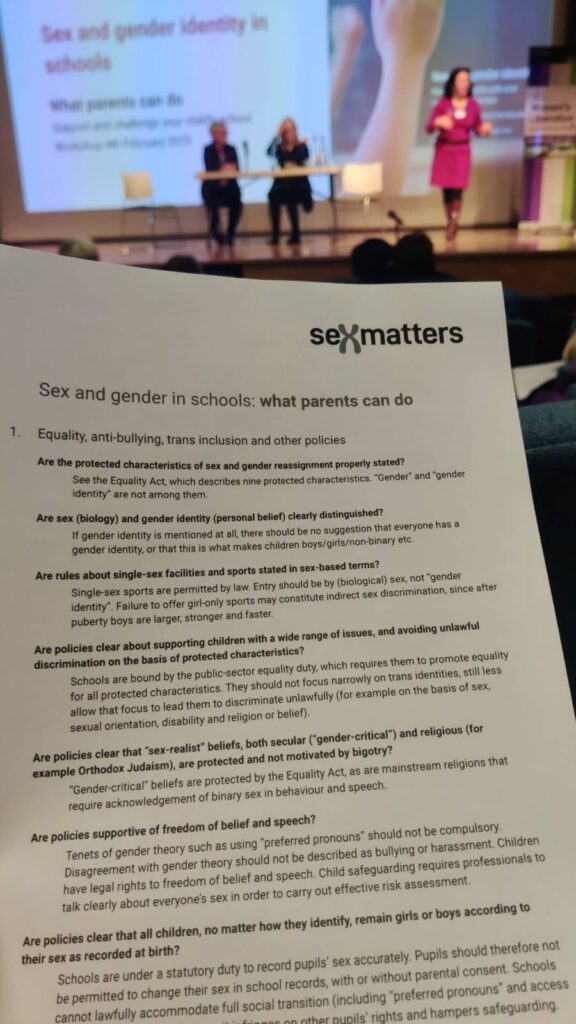

Another practical note was that you don’t have to have a personal relation to a child in school, and you don’t have to be a teacher or parent to say something. This is a safeguarding issue. Safeguarding concerns everyone. If your child left school a while ago or you have little interaction with the schools in your area, it’s still important to write in and speak up. If anything it’s easier because you have less to lose. It is important to remember how awful schools have treated parents over this issue. “The schools are bullies,” one woman said. After hearing stories from parents who had experienced harassment from schools, Joyce made the important point that we can’t be leaving this to parents in traumatising positions. This is a safeguarding issue, and we all have a responsibility to uphold child safeguarding.
WORKSHOP: CONFLICT OF LEGAL RIGHTS, HOW TO BALANCE THEM IN PRACTICE
Education was also the focus of the other workshop attended by David, on ‘Conflict of legal rights, how to balance them in practice’. This was chaired by discrimination law solicitor Audrey Ludwig, with contributions by Liz McGlone, Sarah Vine and (via a pre-recorded video) Alice De Coverley.
Issues covered included the legal definition of discrimination, i.e, people being treated differently on account of certain protected characteristics. Since these include sex, a failure to provide single sex toilets for example could be taken as discriminatory, as it would not take account the specific needs of women and girls. However it was pointed out that the specific instance of females challenging a male who demands to use a women’s toilet has never actually been tested in the courts.
The Public Sector Equality Duty (PSED) requires all state-funded educational institutions to prevent discrimination and to consult all groups affected by its policies. An equality impact assessment is recommended, though not legally required. An important tip for any institution is to pay more attention to the people who don’t like your policies than to those who do.
Sarah Vine spoke about the commonly misunderstood concept of hate crime, pointing out for example that ‘hate’ cannot be a crime in itself but is rather a possible aggravating factor in a separately identified crime. She also considered the concept of a ‘non-crime hate incident’ (e.g. the Harry Miller case) and pointed to official guidance on when it was or was not appropriate for police to intervene. A key reference is the National Standard for Incident Reporting, which includes a three part risk assessment regarding the likely consequences of not taking action: What is the worst that can happen? And would it cause significant disruption to society?
The legal status of gender reassignment was also tackled. Under the Equality Act it’s a protected characteristic, which means it cannot be used to harrass or discriminate against you; however it does not mean that biological males have a right to access female spaces.

Attendees were then asked to apply what we’d learned to a theoretical case in which a female-identifying school student reports a gender critical student to the police for harassment; while a Muslim student is excluding herself from school due to the school’s policy (imposed without consultation) of only providing gender-neutral toilets. While nothing in law is 100% certain or beyond dispute, it was clear that this imaginary school was not following best practice and was leaving itself wide open to legal challenges.
The workshop ended with a Q&A session in which a wide variety of issues were raised by attendees, many of whom worked in the education sector and had faced difficulties on account of their gender critical beliefs.
The workshop as a whole was a positive and lively experience but there was also a sense that we’d only scratched the surface of a vast and complex subject. On the issue of gender as on all others, the law seems an ugly, malformed beast.
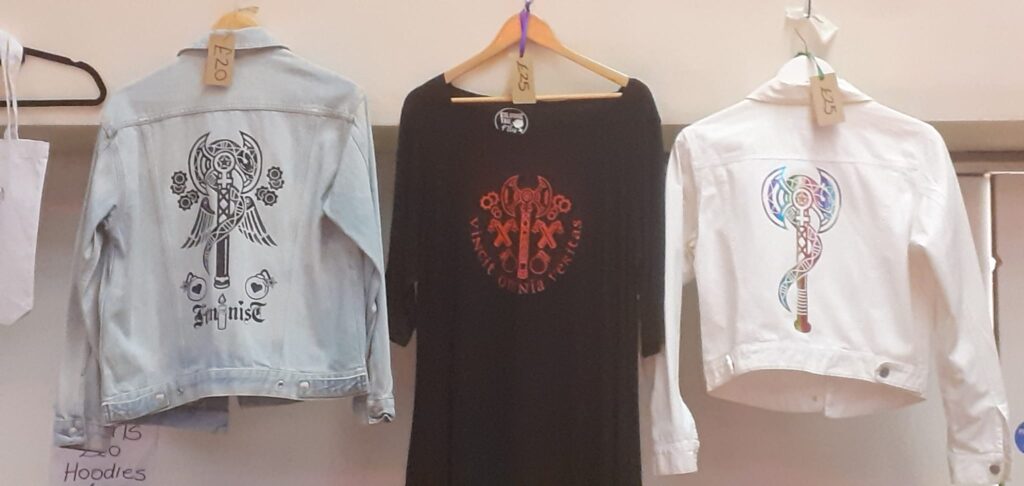
As customary at any self-respecting feminist conference there were plenty of amazing stalls including Labour Women’s Declaration, Nordic Model Now and Liberal Voice for Women, merchandise from Wild Women Workshop and the magazine Radical Notion as well as a vegan lunch, though the promised coffee was far to be seen…
CLOSING PLENARY
The closing plenary was led by Helen Joyce and Julie Bindel, whose speech hit upon the elephant in the room, male violence. Indeed, as feminist Renée Gerlich identified, “transgenderism is a predatory and authoritarian neoliberal ideology, and one that couldn’t take hold outside of the context of rape culture.” This is exactly the point Bindel made, that it is vital not to isolate transgenderism as an issue but to see it as the logical conclusion of the neoliberal capitalist-patriarchy we live in. That in a world where alienating and artificial sex-stereotypes pollute our culture, transgenderism will always pose a threat to the boundaries of women and girls. Jeanne Neath has written well on this.
When we ask how to end transgenderism there is truth in the answer, and it is deeply unwise to be shy about it, that we need to end patriarchy. There was talk about going back to how things were ten to fifteen years ago before the mass proliferation of gender identity, but there is value in this rebirth of feminism, which was exemplified at the conference. The “time before” transgenderism had very little feminism and had its own patriarchal atrocities harming the bodies of women and girls from eating disorders to self-harm, let alone the mass hypersexualisation of our youth which was ruthless throughout the 90s and 00s as this documentary details. As Sheila Jeffreys wrote, “I am in the very fortunate position of having been able to contribute to two waves of feminism: the WLM and the new wave that is taking place now… A new wave is reviving the excitements and ideas of the WLM for a new time and in a very different context.” This is an exciting time for feminism and for going all the way.
Let transgenderism be the spark that ignites a new wave of feminism, let it ignite a fire that scorches patriarchy. There is no compromise on biological reality, and that reality has seen organised working women engage in feminism across the world from all ages and backgrounds. Everyday more women and men are brought to consciousness and to action on this issue. Male supremacy never stopped over the last few decades, and now we have organisations to fight it which didn’t exist before. As Julie Bindel said, transactivism is heavily on the side of legalising prostitution and surrogacy. This is no coincidence. Compare that to the UCL event, where Nordic Model Now had their own stand. Transgenderism can never be treated as a single-issue, and it won’t be overcome as a single-issue. It is also vital, in the face of the transsexual empire, to be wary of concessions and for these concessions to be treated as victories to the point where we could lose such important organisations like Sex Matters. “There is much money to be made from the transsexual empire”, Sheila Jeffreys wrote. Transgenderism is not a silly mistake led by foolish professors in universities, or even by politicians. It is an industry geared towards colonising female biology for corporate profit, with more money being funnelled in every year. Transgenderism therefore cannot be defeated unless capitalism is overthrown, it cannot be defeated unless patriarchy is torn out from its mechanical roots. Perhaps it feels too daunting to think about, but it is necessary and those who do not shy away from the truth will have the most effective and powerful achievements.


