Tomorrow, 19 November, marks International Men’s Day (IMD). In our opinion there is no real need for an International Men’s Day, as we generally live in patriarchies. I.e. men as a group are generally not oppressed or vulnerable, but by and large powerful and the oppressor.
Nonetheless, there is a fairly sizeable movement in support of IMD and organisations across the globe are encouraging men across the world to celebrate the day, describing it as an opportunity “to take part in a global conversation about manhood, masculinity and men’s issues” and addressing “the need to break down barriers that men and boys face as well as celebrating the contribution they make to our country, society and their families“. This year the theme is ‘Zero Male Suicide’.
In the UK it is said today we should focus on:
- The high male suicide rate
- The challenges faced by boys and men at all stages of education and work including attainment, re-training, stress, redundancy and unemployment
- Men’s health (including male cancers), shorter life expectancy, body image and workplace deaths – plus the health impact of Covid-19
- The challenges faced by the most marginalised men and boys in society – for instance, homeless men, boys in care, school excluded boys and the high rate of male deaths in custody
- Male victims of violence and crime – for instance, bullying, sexual violence, gang violence, and, those coerced into county lines and other criminal activity
- The challenges faced by men as parents, particularly new fathers and separated fathers
- Male victims and survivors of sexual abuse, rape, sexual exploitation, domestic abuse, forced marriage, honour-based crime, stalking. Online image-abuse, sextortion and modern slavery
- The negative portrayal of men, boys and fathers
There is no doubt that these are serious issues. However it seems that other large issues are ignored by organisers of International Men’s Day, possibly due to the focus on: “the negative portrayal of men, boys and fathers”. On IMD however, we should not just look at the issues men and boys face, but also the problems men and boys are responsible for as they are intertwined with some of the challenges men face in the 21st century.
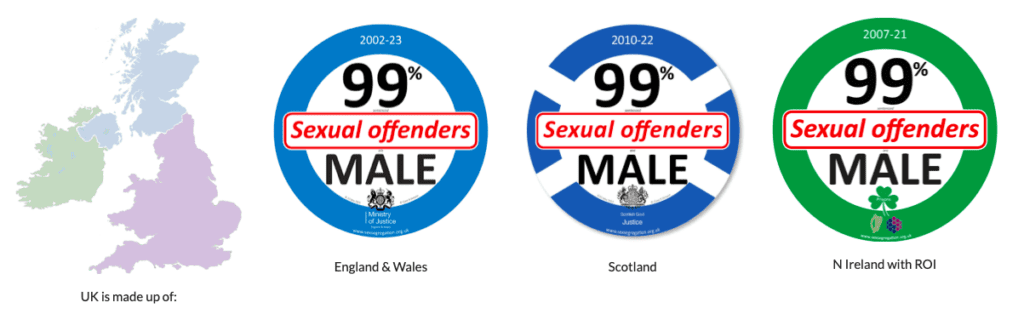
Recent research found that “one in every eight titles on the front pages of the UK’s most popular porn websites described sexual violence against women and girls“, this being “mainstream pornography on mainstream sites with the mainstream message that sexual violence is sexy“. These are sobering facts, but there is more. Research also found that the “age a man encountered porn decides in what precise way they’ll mistreat women“, meaning that pornography has a direct link to male violence against women and girls. If we then take into account that the “average age that first men first saw porn was 13.37 years old“, there is not option left but to speak about the mental health impact of pornography on boys and men but more importantly the impact on their (violent) behaviours towards women and girls. Because to put it more bluntly, the consumption of violent porn encourages men and boys to be sexually violent to women and girls. Did you for instance know that 99% of sexual offenders across the 3 UK jurisdictions (England & Wales, Scotland and N. Ireland & ROI) are male?
The effects for women and girls are devastating. We believe that happy and healthy men do not watch violent pornography or enact the violent acts they see in pornography in their relationships with their partners, girlfriends or wives. So surely any examination of men’s (mental) health needs to include looking at men’s use of pornography, male sexual violence and male violence in general and what causes men to be violent against women and girls. In the UK in 2023 alone, almost 90 women have been “killed in circumstances in which a man or men are primary suspect“. In the last 10 years (2014–2023) over 1300 women have been killed with men being either the primary suspect or the killer in the UK alone.
On the subject of men’s (mental) health in particular it is interesting to note that very little attention to health and healthy behaviours in relation to family planning, being a partner etc. The (mental) health of men who are in a relationship is obviously in part dependent on the ‘health’ of the relationship in question. So to disregard issues surrounding communication, compromising, sharing and general equality within intimate relationships is strange – especially as compromising and striving for equality are generally not qualities that men are socialised to embrace. Instead we are often to socialised to get what we want, no matter how.
What also strikes us about International Men’s Day is that routinely no single reference is made to gay or bisexual men and the issues and challenges they face as a group due to their sexual orientation. This might include (mental) health issues, family planning issues, abuse, trauma but also the current threat to single-sex spaces and indeed the threat to the mere expression of same-sex attraction in the current political climate.
Finally, we would like to address the ‘issue’ of the “negative portrayal of men, boys and fathers”. As male allies, it is important that we accept responsibility not just for the impact men’s issues have on men, but also the impact our issues have on women, girls and society as a whole. Any idea that it is enough to look at issues men face, whilst rejecting all responsibility that men have within that, runs the risk of looking like a men’s pity party at best and men’s rights activism at worst.
In case the headline of this blog is misunderstood by anyone, we’d like to make clear thataddressing, challenging and working to combat men’s use of pornography and male violence against women should NEVER be relegated to a single day. Male violence against women and girls occurs daily, every minute of every hour, so we must be ready to challenge and fight it at the same speed it is happening.