

EVENTS

9 November – ‘Women for Sale‘ Conference
On 9 November we attended the ‘Women for Sale‘ conference by Nordic Model Now. We ran a ‘Pornification Deprogramming‘ workshop alongside Michael from Men at Work, had a stall in the foyer, attended some of the talks in the main hall and had a generally great time speaking to feminists and like-minded men. You can read our detailed write up of the conference here.

12 November – ‘Tackling Strangulation‘ Conference
We attended the ‘Tackling Strangulation: Working To Save Lives’ conference organised by the Institute for Addressing Strangulation (IFAS) in Manchester.
The first speaker following the opening by Nicole Jacobs (Domestic Abuse Commissioner for England and Wales) we heard from Professor Cath White, the Medical Director of IFAS. She opened her talk with the question ‘What does it take to raise a perpetrator / strangler and a victim?’ (borrowed from the African proverb ‘It takes a village to raise a child’) to give us something to think about.
White moved on to speak about the need to shift the focus from being solely on the victims of strangulation to primary and secondary prevention; the perpetrators and the would-be perpetrators. Recent research conducted by IFAS showed that strangulation is a generational issue and more prevalent in the age group 16-34.
One key takeaway and one finding that appeared throughout the conference, was that when it comes to strangulation, the perception of the perpetrators is wildly different to that of the victims. Very worryingly it was found over and over again that where strangulation was ‘negotiated’, those doing the strangling perceived it to be more consensual than those being strangled.
White made it very clear, why strangulation is an urgent problem, namely because: prevalence is high and increasing; it has high impact medical consequences (e.g. stroke); high impact psychosocial consequences; intergenerational impact; low prosecution rates; lack of equity of services for victims; lack of awareness about the dangers and the question of who is taking the overall responsibility being left unanswered.
To summarise, Professor White concluded that ‘consensual’ (assuming this exists) is NOT safe when it comes to strangulation. In other words strangulation is NEVER safe.
Just before the lunch break we heard from two women who had survived strangulation men. What stuck with me most from one of the testimonies, was how normalised strangulation has become within relationships. One of the survivors spoke about a prospective husband who had asked her if he could ‘choke’ her during sex. When she replied “No.”, he simply replied “What, not ever?”. It is inconceivable to me, that we live in a world where such a demand is made so casually. Another thing that really stood out for me from the survivor stories were the ways in which the women were often let down by justice services. One woman recounted a case in which an abuser was not charged despite confessing to the strangulation by text and injuries having been evidenced with photos. The reason there was no charge, was because it could not be proven that the man strangled the woman ‘without provocation’. As if there is ever an instance where it is ok for a man to strangle a woman!?
After the break Dame Vera Baird KC took to the stage. Baird spoke about some statistics following the non-fatal strangulation offence coming into force in 2022. Baird highlighted that of the non-fatal strangulation offences recorded in the first year the vast majority were perpetrated by men, against women and that in the vast majority of cases there was no criminal justice action at all. What was encouraging, was that compared to the first 6 months, the number of reports doubled in the second 6 months which hopefully means that women are becoming more aware that strangulation is not ‘normal’, but a criminal act. I really hope women will continue to have the courage and the confidence to report strangulation, despite the lacking criminal justice response and that more men will be prevented from strangling women & girls due to this now being an offence.
The next speaker was Professor Heather Douglas from Melbourne spoke about recent research she had conducted regarding strangulation in Australia. In her research it came to the fore that pornography, film and conversations with friends are the main ways in which people first find out / learn about strangulation. It seemed to me like this was a drip-drip effect down from pornography, to conversations within friend groups and mainstream media, which is why it is so important that the brutal misogynistic violence that is so prevalent in porn is addressed.
One of the things that really stuck with me from the conference was the concept of ‘enthusiastic consent’, which I had not come across before, but felt very useful. I believe it was Professor David Gadd who spoke about this and the importance to focus on this, rather than mere concept of consent by itself.
In the Q&A after the event, attendees pointed out a couple of very important points. Firstly that we need to remind ourselves that strangulation and male violence against women and girls is prevalent throughout society. All kinds of men perpetrate male violence and all kinds of women and girls suffer male violence. The second point was the fact that the available data is often missing important granulation for us to confidently speak about what exactly is going on, because data is collected by gender identity rather than sex. As a result, we have no real insight with regards to for instance the impact of pornography by sex and the impact of sex on strangulation.
16 November


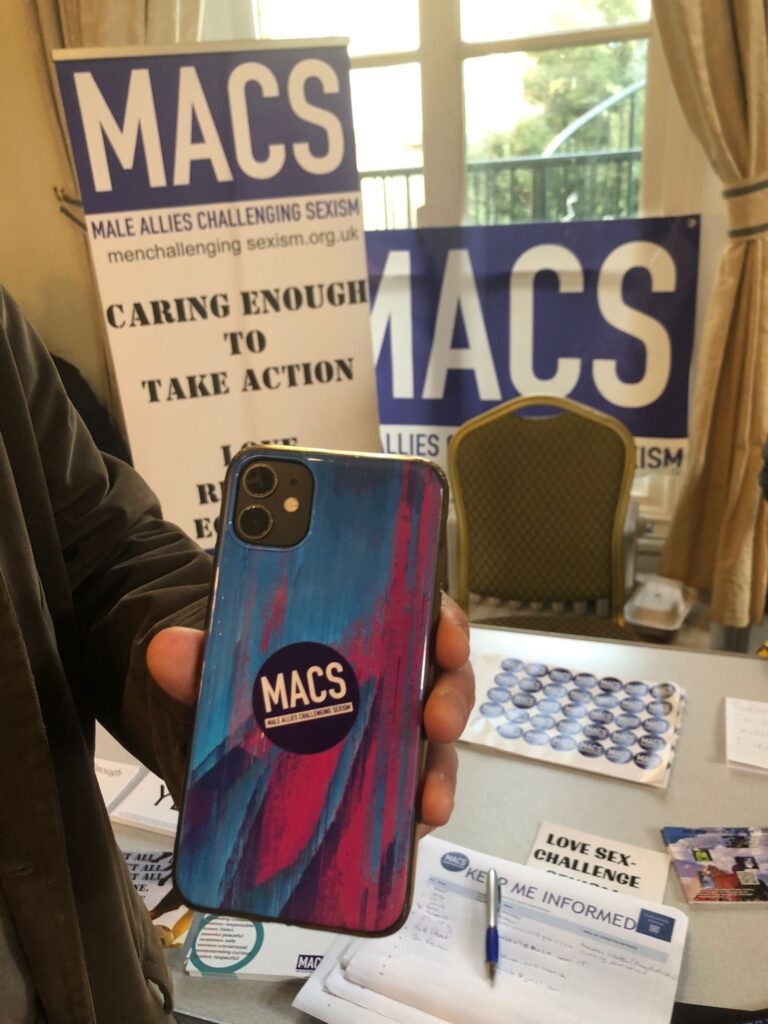
On 16 November we had a stall at the Saltaire Peace & Crafts Fair, which is organised annually by the Yorkshire CND. Our stall got a lot of interest and we had many interesting conversation with men and women of all ages about the work we do. We made a couple of great connections, which we are looking forward to following up on.
20 November – ‘Is Surrey Safe for Women?’ Conference


On 20 November Chris attended the ‘Is Surrey Safe for Women‘ conference organised by Soroptimist International. Chris was one of the keynote speakers at the conference, speaking about the police referring to male violence against women and girls as a form of terrorism, and how a lot of men would be very active in opposing terrorism. Whilst ‘traditional’ anti-terrorism work gets £2 billion per year spent on it, there is no money to combat VAWG, despite the fact that in terms of lives lost, VAWG is 20 x more severe than ‘traditional terrorism’. Wouldn’t it be great if preventing VAWG got the same level of funding, or even half of it? Coincidentally, this was one of the points Dame Vera Baird had spoken about at the IFAS conference a few days later, which Chris had not been present at.
One of the other speakers at the conference was Prof. Sue Edwards, who talked about the awful consequences survivors of male violence face as a result of delays in the legal process. Edwards explained that for some survivors, these delays can cause as much trauma as the man’s attack itself. Chris was shocked to learn during Edwards’ talk that in just 6 months 22,000 reports had been received for coercive control and 8,400 reports for non fatal strangulation. These numbers are truly staggering!
Former Chair of Respect, Sarah Mullin, talked about the number of perpetrators in the UK, which is estimated to be around 2.3 million. This led Chris to wonder that there should be be 26 million (potential) male allies out there…but where are they?
Chris learnt a lot at the conference and was particularly delighted to meet Gill Kirkman from the University of Bradford and None in Three and find out about the game ‘Danielle’. Danielle is a Windows-based game focusing on the intimate relationship between Danielle (16) and James (17) and James’ increasingly controlling and abusive behaviour. The game is for young people aged 14+ and aims “to facilitate young people’s learning about what healthy and unhealthy relationships look like, empowering them to spot and call out the early signs of intimate partner violence, to prevent it in their relationships”. You can find out more about Danielle , which Chris felt could be a great asset in working with young people, here.
25 to 28 November – Reclaim the Night & Activism in Blackpool
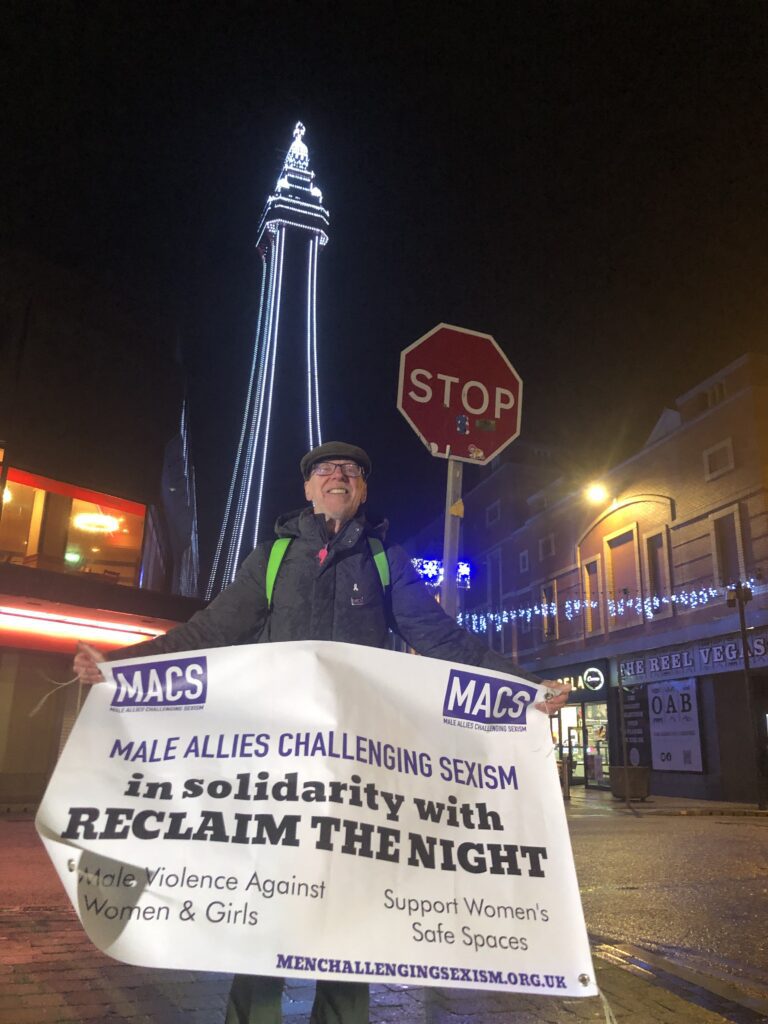
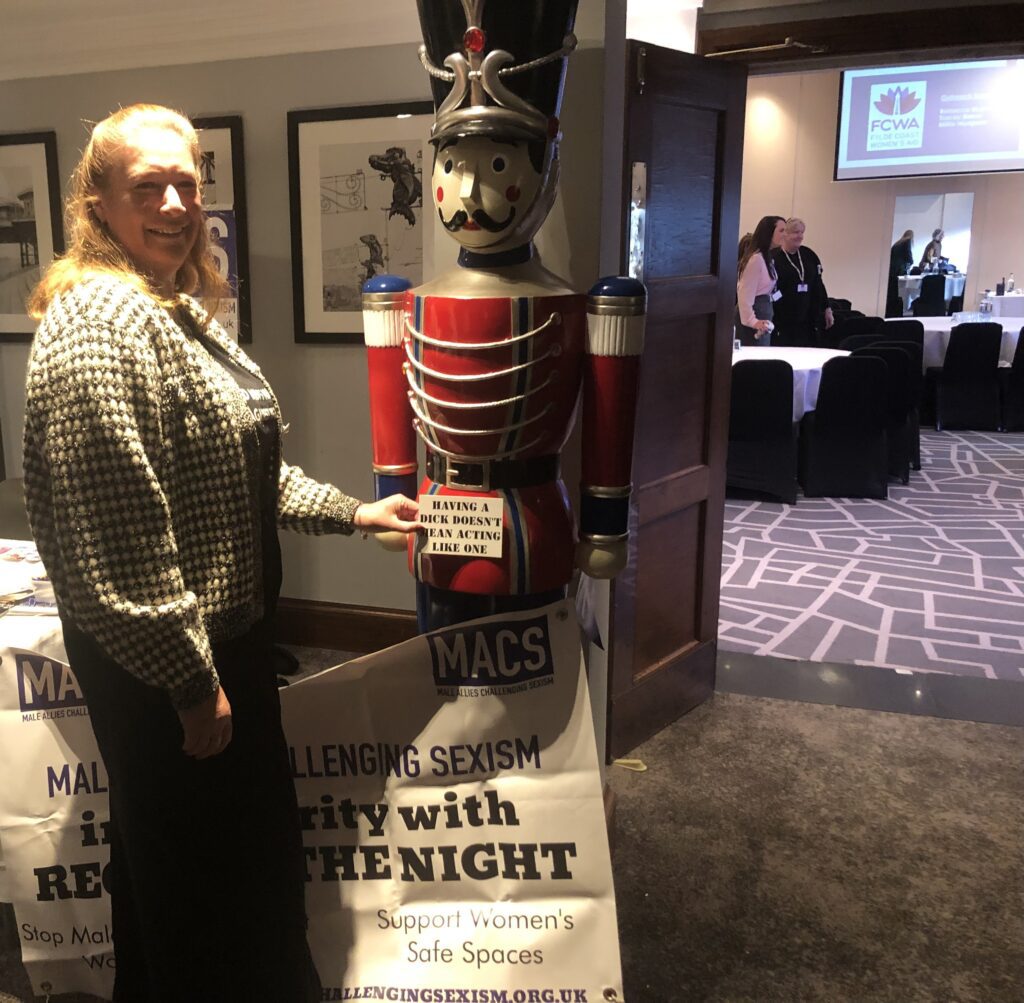
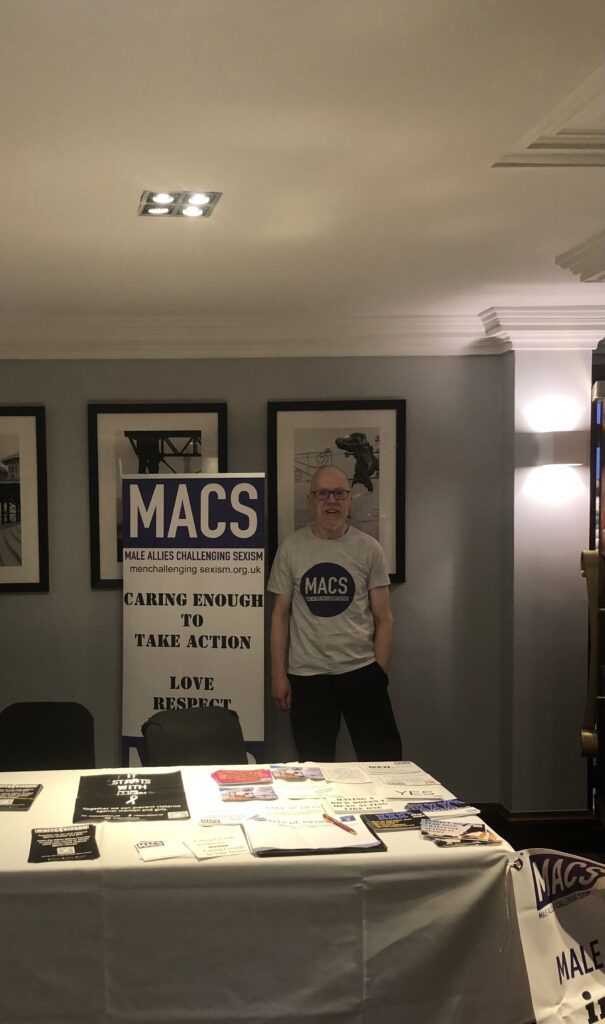
Blackpool Reclaim the Night issued an invitation to men to support their RTN event. Knowing it was important that we respond, Chris travelled to Blackpool to represent MACS and men’s support to end male violence against women and girls in general.
About 100 people braved the cold weather to take the message out on the International Day for the Elimination of Male Violence Against Women. As Blackpool Council is White Ribbon accredited, Blackpool Tower was lit up white and the Blackpool Illuminations included a giant tableaux “A Better World is Possible“.
Reclaim the Night slogans / placards on the night included “She the People” – and 2 attached to dogs “This b*tch bites back.” and “Why ask permission to touch me , but not my Mum.”. Chris was impressed to see Blackpool South MP, Chris Webb and another man pushing their babies in a buggy during the march.
Wednesday was in all likelihood Chris’ most useful and challenging day of his 16 days for 2024. That day he went to Blackpool College to give six 30-minute presentations to students alongside Let Reid, the Domestic Abuse Support co-ordinator of Blackpool Council. The workshops featured over 350 students from construction, electrical work and decorating courses (with some being turned away because of having dirty boots).
The biggest revelations for Chris came from the discussions, during which some of the male students spoke about the depressing extent of non-fatal strangulation.
25 November – Merched Cymru Webinar on Working with Boys
On the International Day for the Elimination of (Male) Violence Against Women (IDEVAW) we attended the Merched Cymru webinar Working with Boys to Develop an Understanding of Violence Against Women and Girls. The webinar was facilitated by Ali Morris, who is on the Executive Committee of Merched Cymru.
The webinar was really interesting and we left with a sense of how difficult it is to get it right when speaking to boys about male violence against women and girls. If we do not get it right there is a risk of shoving boys into spaces where they get information from people / services that are very likely to be harmful (e.g. reddit, TikTok, Discord).
The speakers Dr. Tamsin Preece and Michael Conroy, from Humanise, addressed the need to treat boys humanely and honestly. We also need to find a balance between recognising where boys are at, but not ‘letting them get away’ with things.
Tamsin also spoke about the need to starting broadly with male violence in general and then narrowing it down to male violence against women, so boys don’t feel that their experiences are being forgotten about and wind up thinking ‘what about men’?
29 November – Reclaim the Night Leeds

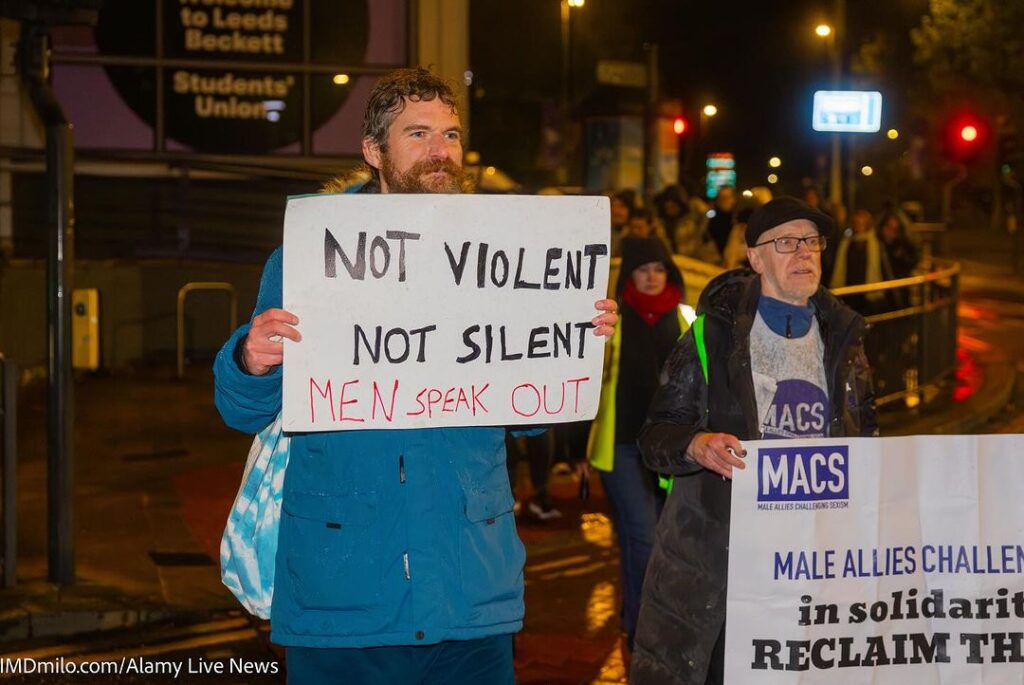
On 29 November Chris, Ben and Björn attended Reclaim the Night Leeds. The event was really well organised and the turnout was great, despite the chilly and drizzly weather.
As men, we felt it was important to march alongside women in solidarity and highlight the epidemic of male violence against women and girls as well as highlighting that men’s actions and behaviours mean that women aren’t safe day or night, 365 days a year.
The women on the march had put a lot of thought into the feelings / messages they wanted to bring across on the night. Below are some of the ones that really stood out to us:
“Not all men, but enough for us all to be scared.” “Who do you call when the cops kill women?”
“Change the rules ⛔️, not our routes.” “Girls just wanna walk home.”
The women sang all well-known chants that accompany RTN events and when it came to:
“What do we want? Safe Streets! When do we want them? NOW!“
We could not help to think, that the message here really is:
“What do we want? Safe MEN! When do we want them? NOW!“
The march ended at Leeds Central Library, where we listened to a number of speeches. Of course we all know that male violence against women and girls is rife across the UK. However, listening to the speeches of the young women at the end of the march, it was still disheartening to stand still at the violence men as a group perpetrate and to hear how rife these issues are at Leeds University, where a lot of the women who spoke went for their education.
The speech by Lauren Royall, president of SASHA (Students Against Sexual Harassment and Assault), was particularly poignant and we advise you to check them out if you live in Leeds or the surrounding area.
FINANCIAL SUPPORT, OBJECTIONS & LETTERS TO MPs
We made a donation to support Sarah Summers’ legal challenge against Brighton’s Rape Crisis Centre Survivors’ Network. Summers’ base for her challenge is “that the Survivors’ Network’s ‘trans inclusive’ policy is indirectly discriminatory: that is, it puts women at a particular disadvantage compared to men, and can’t be justified as a proportionate means of achieving a legitimate aim“.
We emailed our MP, asking him to close the loophole between online and offline regulation of pornographic content using a template letter from CEASE UK. We also contacted our MP to send them a copy of CEASE’s latest report: Profits before People.
Towards the end of the month we wrote a letter of objection regarding a licence renewal application for a SEV (Sex Entertainment Venue) in Manchester.
Petitions
We signed a petition to the government to demand they tackle image-based abuse. The petition was started by a woman who was a victim of image-based abuse, when somebody had turned photos of her into sexually explicit deepfake ‘porn’.
We also signed a petition calling on the FA to ban men from playing in women’s football teams. This petition was started after a 17-year old girl received a 6-match ban for expressing safety concerns in a game where one of her opponents was a man.
NEXT DISCUSSION GROUP MEETING
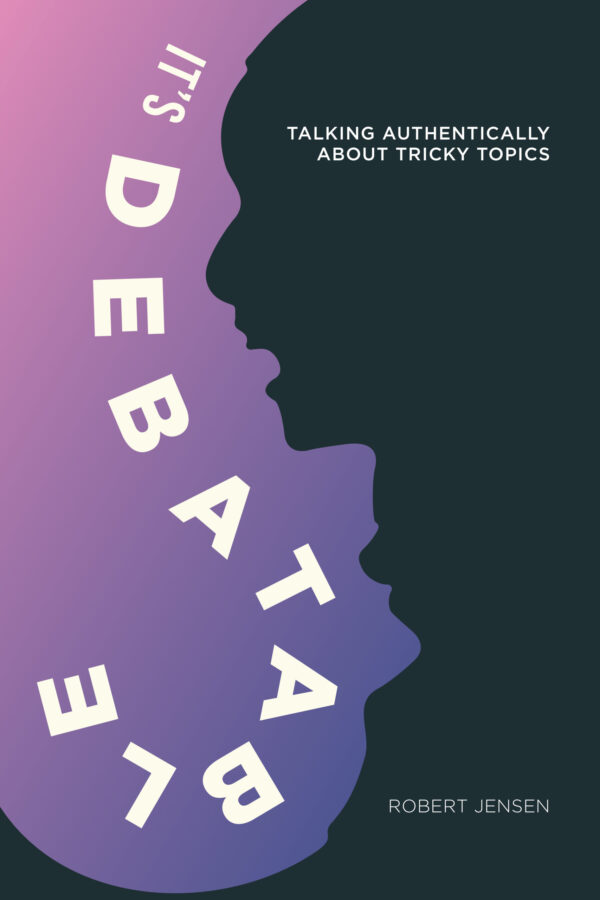
For our December discussion group we’re reading from It’s Debatable: Talking Authentically about Tricky Topics by Robert Jensen. The discussion group is taking place on 30 December at 5:45pm (GMT) online. To join us, please email allies@menchallengingsexism.org.uk or contact us on social media.


